Why do some people openly talk about everything they feel, while others barely verbalize emotions at all?
One person may immediately say they’re hurt, anxious, or overwhelmed.
Another may go quiet, withdraw, or process everything internally.
Neither automatically cares more or less.
People simply express emotions differently.
And when those differences aren’t understood, they often create confusion, misinterpretation, and unnecessary relationship tension.
🧠 What Is Emotional Expression?
Emotional expression is the way people communicate internal feelings through words, tone, facial expressions, body language, and behavior.
Not everyone expresses emotions in the same way.
Some people are naturally more direct.
Others communicate feelings more subtly.
For example:
- verbally naming emotions clearly
- showing emotion through tone or facial expressions
- expressing care through actions instead of words
- needing time before discussing feelings
These are all forms of emotional communication.
They just look different.
🏡 1. Upbringing and Family Environment
A huge amount of emotional behavior is learned early.
Family systems teach people what is emotionally acceptable.
Sometimes very explicitly.
Sometimes without anyone realizing it.
- emotions were openly discussed
- vulnerability was encouraged
- conflict was handled directly
- emotional needs were acknowledged
People raised in these environments often become more comfortable expressing emotions.
On the other hand:
- emotions were minimized
- vulnerability felt unsafe
- conflict was avoided
- emotional expression was criticized
These environments can lead people to suppress or internalize feelings.
Not because they don’t have emotions.
Because expression may not feel natural or safe.
🧩 2. Personality Traits Influence Emotional Style
Personality also affects emotional communication.
Some people naturally externalize.
Others internalize.
- extroverted individuals may process emotions externally
- introverted individuals may process internally first
- highly sensitive people may feel emotions more intensely
- highly analytical people may prioritize logic before expression
This can create very different communication styles.
For example:
One person wants to talk immediately.
Another needs hours—or days—to process first.
Both can be emotionally valid.
Annoying timing mismatch, though.
💔 3. Past Experiences Shape Emotional Habits
Past relationships matter too.
A lot.
People learn emotional behavior from what has historically felt safe or unsafe.
- rejection may create emotional guardedness
- criticism may reduce vulnerability
- betrayal may increase emotional caution
- supportive relationships may encourage openness
Over time, these responses become habitual.
Automatic even.
Sometimes emotional expression is less about current personality and more about past adaptation.
A person who appears emotionally distant may simply be highly practiced at self-protection.
🔄 Common Emotional Expression Differences
Differences usually become most visible in close relationships.
Especially during stress, conflict, or emotional need.
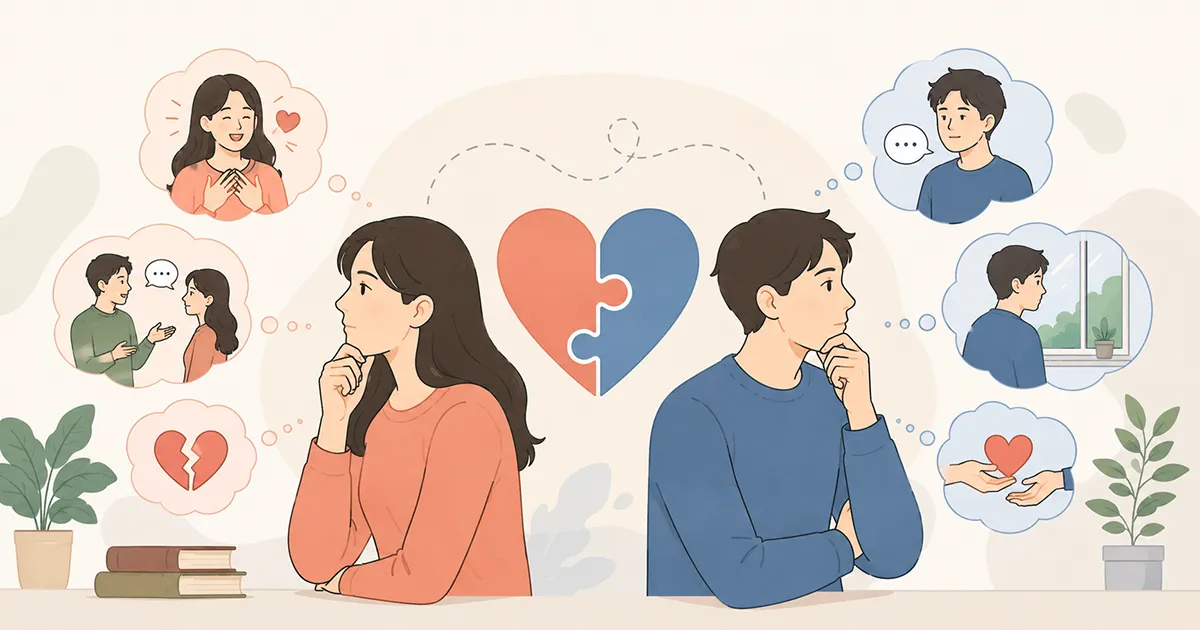
- one person wants verbal reassurance
- the other expresses care through actions
- one prefers immediate discussion
- the other withdraws to process
This often leads to misunderstandings.
Not because anyone is intentionally difficult.
Because people are using different emotional languages.
💞 How Emotional Expression Affects Relationships
When emotional styles differ, relationship tension often follows.
A lot of avoidable tension, honestly.
For example:
- silence gets interpreted as indifference
- emotional intensity feels overwhelming
- indirect communication feels confusing
- low verbal expression feels emotionally distant
One person may think:
- Why won’t they just tell me how they feel?
The other may think:
- Why do we need to discuss everything immediately?
Neither perspective is automatically wrong.
They’re usually operating from different emotional norms.
❗ Why Misinterpretation Happens So Easily
People often judge others using their own emotional framework.
Which is understandable.
And frequently inaccurate.
Most people assume the way they naturally express care, stress, or affection is the “normal” way.
So when someone behaves differently, it can feel wrong.
Or concerning.
Or emotionally insufficient.
But in many cases, the issue is not emotional absence.
It’s emotional style mismatch.
Huge difference.
🗣 How to Improve Emotional Communication
Understanding emotional differences is useful.
Adapting communication is even more useful.
- identify your own emotional style
- observe how others communicate care
- avoid assuming intent
- ask clarifying questions directly
Examples:
- Do you usually need time before talking?
- How do you typically show care?
- What helps you feel emotionally understood?
These conversations reduce unnecessary projection.
Which relationships generally appreciate.
🌱 Emotional Expression Can Change
Emotional communication is not completely fixed.
People can become more expressive, more emotionally aware, and better at communicating over time.
Usually through:
- self-awareness
- healthier relationships
- therapy
- emotional practice
- increased psychological safety
Growth is possible.
Even for people who currently communicate like encrypted files.
There is hope.
FAQ
Why do people express emotions differently?
Can emotional expression styles change?
Does expressing emotions less mean someone cares less?
How do emotional expression differences affect relationships?
🧠 Conclusion
People do not all communicate emotions the same way.
Some express everything openly.
Others process quietly and communicate more subtly.
Neither style is automatically healthier or more caring.
Problems usually arise when differences are misunderstood.
The more you understand emotional expression patterns—both your own and other people’s—the easier relationships become to navigate.
And honestly, most people could use fewer avoidable misunderstandings.