Most people assume personality is something you’re simply born with.
You’re either outgoing or quiet, organized or spontaneous, emotionally calm or naturally more reactive.
But personality is not fully fixed at birth.
It develops over time through biology, childhood experiences, relationships, environment, and life events.
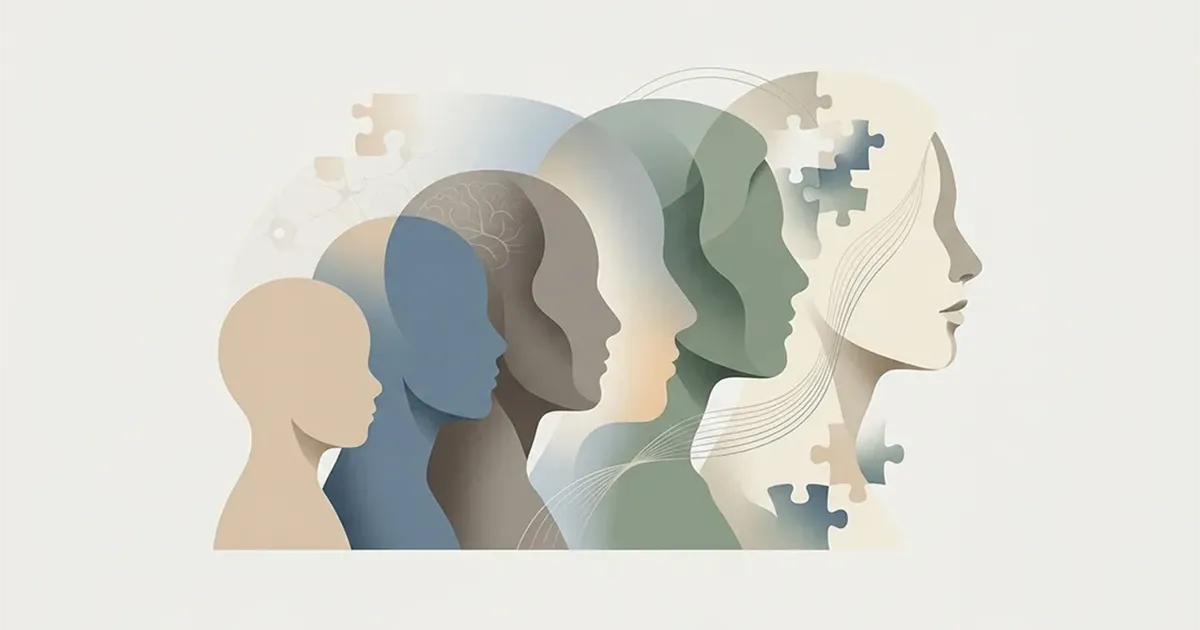
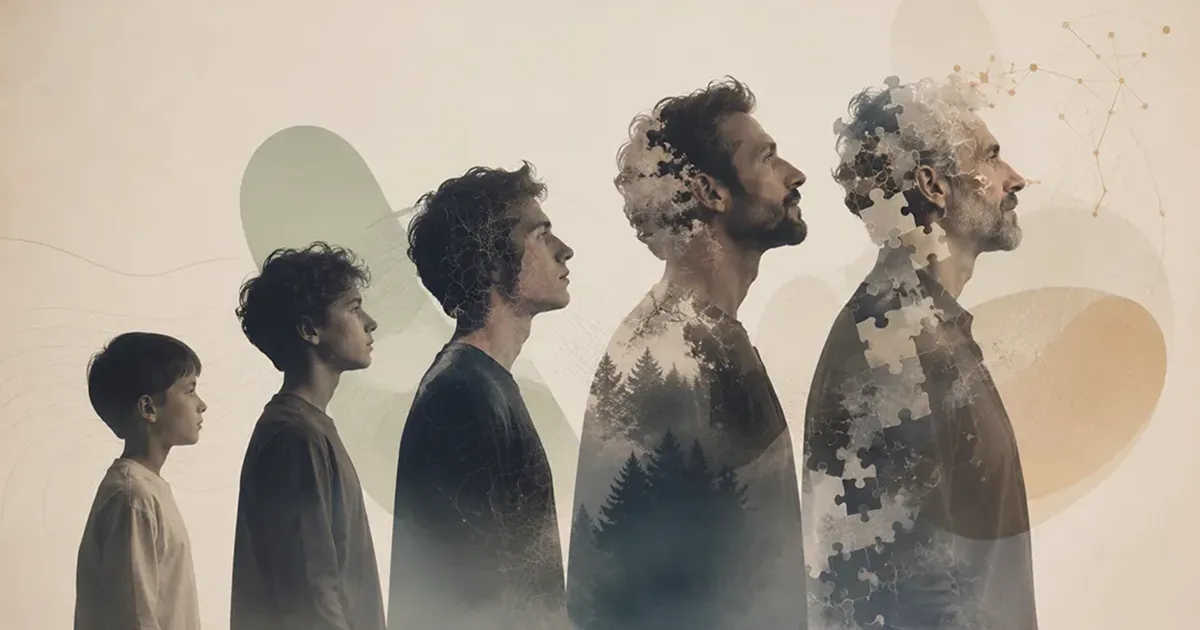
That’s why the version of you at 8, 18, and 28 can feel both familiar and completely different.
Understanding how personality develops helps explain why people change, why some patterns stay, and how life quietly shapes who you become.
🧬 Personality Starts With Biology
A portion of personality begins with temperament.
Temperament refers to natural behavioral tendencies visible early in life.
Even very young children often show clear differences in:
- emotional sensitivity
- sociability
- activity level
- impulsivity
- adaptability
Temperament is often considered the biological foundation of personality. It explains why children can have noticeably different behavioral styles from an early age.
For example:
- One child may be highly curious and socially bold
- Another may be cautious, observant, and slower to warm up
- Some children react intensely to stress
- Others appear naturally calm and emotionally regulated
These differences don’t determine your entire future personality.
But they create a starting point.
A kind of psychological baseline.
👶 Childhood Shapes Early Personality Patterns
Biology matters.
But environment quickly enters the chat.
Childhood is one of the biggest personality-shaping periods because this is when people learn:
- how safe the world feels
- whether emotions are welcomed or punished
- how relationships function
- what behaviors get rewarded
A child raised in a stable, supportive environment may learn:
- emotional security
- trust
- self-expression
- resilience
A child raised in unpredictable or highly critical environments may develop:
- hyper-awareness
- people-pleasing
- emotional guardedness
- anxiety-driven coping patterns
Children don’t just inherit personality tendencies. They also adapt to survive their environment.
This is why personality is never purely nature or nurture.
It’s both.
Always both.
🏫 Social Experiences Continue Personality Development
As people grow older, social experiences start reinforcing certain traits.
School, friendships, rejection, praise, group belonging, and comparison all leave marks.
For example:
- Repeated praise for responsibility may strengthen conscientiousness
- Social rejection may increase self-consciousness or introversion
- Supportive friendships can strengthen confidence and openness
- Chronic criticism can increase emotional sensitivity
Over time, repeated experiences shape expectations.
And expectations influence behavior.
If you repeatedly experience social success, you may become more expressive.
If you repeatedly experience embarrassment or criticism, you may become more cautious.
Not because your core personality disappeared.
Because adaptation happened.
Very human.
Very common.
🧠 Personality Becomes More Stable With Age
Personality is usually more flexible earlier in life.
Over time, it tends to stabilize.
This happens because people gradually reinforce their own patterns.
They choose environments, habits, careers, and relationships aligned with their tendencies.
As people age, they often become more behaviorally consistent because they repeatedly select environments that match their personality.
For example:
- introverts may build quieter lifestyles
- highly conscientious people may choose structured careers
- highly open individuals may pursue novelty-driven environments
This creates a feedback loop.
You shape your environment.
Then your environment reinforces you.
Which is kind of fascinating.
And mildly inconvenient if your patterns are unhealthy.
🔄 Major Life Events Can Change Personality
Personality is relatively stable.
Not frozen.
Big life events can shift people in meaningful ways.
Examples include:
- trauma
- loss
- long-term relationships
- parenthood
- career changes
- therapy
- relocation
- major success or failure
A highly avoidant person may become more emotionally open after a healthy relationship.
A previously relaxed person may become more anxious after chronic stress.
Someone once highly insecure may become significantly more confident through life experience.
Change happens.
Usually gradually.
Rarely dramatically overnight.
Despite what one productivity video may have promised.
🌍 Culture Also Shapes Personality
Personality does not develop in a vacuum.
Culture influences what behaviors are encouraged, discouraged, or rewarded.
For example:
- some cultures reward independence and assertiveness
- others emphasize harmony, modesty, and collectivism
- emotional expression norms vary widely
- communication styles are culturally shaped
This means personality is partly filtered through context.
A trait seen as confidence in one environment may be interpreted as arrogance in another.
Behavior exists inside systems.
Always.
🛠 Can You Intentionally Change Personality?
To some extent, yes.
You may not fully rewrite your natural tendencies.
But you can absolutely influence how your personality is expressed.
This often happens through:
- self-awareness
- therapy
- repeated habit change
- healthier environments
- intentional discomfort
- becoming more assertive
- improving emotional regulation
- building better boundaries
- increasing social confidence
- reducing impulsive behaviors
Growth doesn’t mean becoming someone else.
It usually means becoming a healthier version of your existing tendencies.
That’s a much more realistic goal.
And honestly, less exhausting.
🧩 Why Understanding Personality Development Matters
Understanding personality development changes how people interpret themselves.
Instead of seeing yourself as “just like this,” you start recognizing patterns.
Origins.
Adaptations.
Behavioral loops.
Many personality traits are not random flaws or strengths. They are patterns shaped by both natural tendencies and lived experiences.
This perspective creates more self-awareness and less unnecessary self-judgment.
You become easier to understand.
Which makes growth easier too.
A useful trade.
FAQ
How does personality develop over time?
Is personality determined at birth?
Can personality change as you get older?
What influences personality the most?
🌱 Conclusion
Personality is not something that appears fully formed.
It develops.
Piece by piece.
Through biology, childhood, social experiences, environment, and the countless small ways life shapes people over time.
Some parts of you are deeply consistent.
Others are more flexible than you probably realize.
That balance is what makes personality feel both familiar and dynamic.
You are not infinitely changeable.
But you are also not permanently fixed.
And honestly? That’s probably the most useful thing to understand about personality in the first place.