You had the whole weekend. Saturday came and went — some errands, a few hours of YouTube, takeout you didn’t really taste. Sunday felt like a warning. By 8pm you were already dreading Monday, somehow more tired than when Friday ended.
This isn’t laziness. It’s not a lack of discipline or the wrong morning routine. It’s that no one actually taught us how to rest — and most of what passes for “a day off” is just unstructured exhaustion wearing leisure’s clothes.
😮💨 Why Your Weekends Leave You Drained Anyway
Here’s the uncomfortable truth: the kind of tired most people carry into the weekend isn’t physical. It’s neural. It’s the accumulated weight of context-switching, low-grade social performance, decision fatigue, and the constant low hum of notifications that never fully goes silent.
Physical tiredness resolves with sleep. This kind doesn’t.
When your nervous system has been running in a mild threat-response state all week — deadlines, difficult emails, that one meeting where you had to be “on” — it doesn’t just power down because your calendar says Saturday. It stays alert. Watchful. Ready.
So you scroll. Not because you’re curious about anything, but because the stimulation feels like doing something while your body pretends to rest. You watch three episodes of a show you’re not fully invested in. You refresh apps without really reading them. You call it a lazy day.
“The opposite of stress isn’t entertainment. It’s safety.”
And most weekends, we never actually feel safe enough to stop bracing.
🧠 The Problem with Performative Self-Care
Somewhere between the aesthetic Sunday reset videos and the wellness content algorithm, “self-care” became its own form of pressure.
You’re supposed to wake up early, hydrate, journal, work out, meal prep, take a bath with the right candles, spend time in nature, and somehow feel grateful for all of it. If you don’t, the day is wasted.
This is still productivity culture. It just smells like lavender.
Real restoration doesn’t look photogenic. Sometimes it’s sitting on your couch without your phone for an uncomfortable amount of time. It’s eating something simple. It’s a walk with no destination and no podcast in your ears. It’s the 20 minutes where you felt a little bored and didn’t immediately fill it.
Boredom is actually part of recovery. Your brain needs unstructured processing time — not more input.
━━━━━━━━━━━━━━━
🌅 What a Real Reset Actually Prioritizes
Before any checklist, a framework shift: the goal of a reset weekend isn’t to accomplish recovery like a task. It’s to remove the things that prevent it.
That’s a different starting point. Instead of adding more — more routines, more healthy habits, more optimized sleep hygiene — you’re asking: what is keeping my nervous system from downshifting?
Usually it’s:
- Screens too close to waking up
- Social obligations that feel like work
- Background noise you don’t notice (news, group chats, ambient stress content)
- The guilt loop of feeling like you should be doing something useful
When you reduce those inputs, rest tends to happen more naturally than you’d expect.
☀️ Saturday: Slow the Signal
Don’t plan Saturday until Friday night — and plan it lightly. The goal is to break the rhythm of the workweek, which runs on urgency and fast switching.
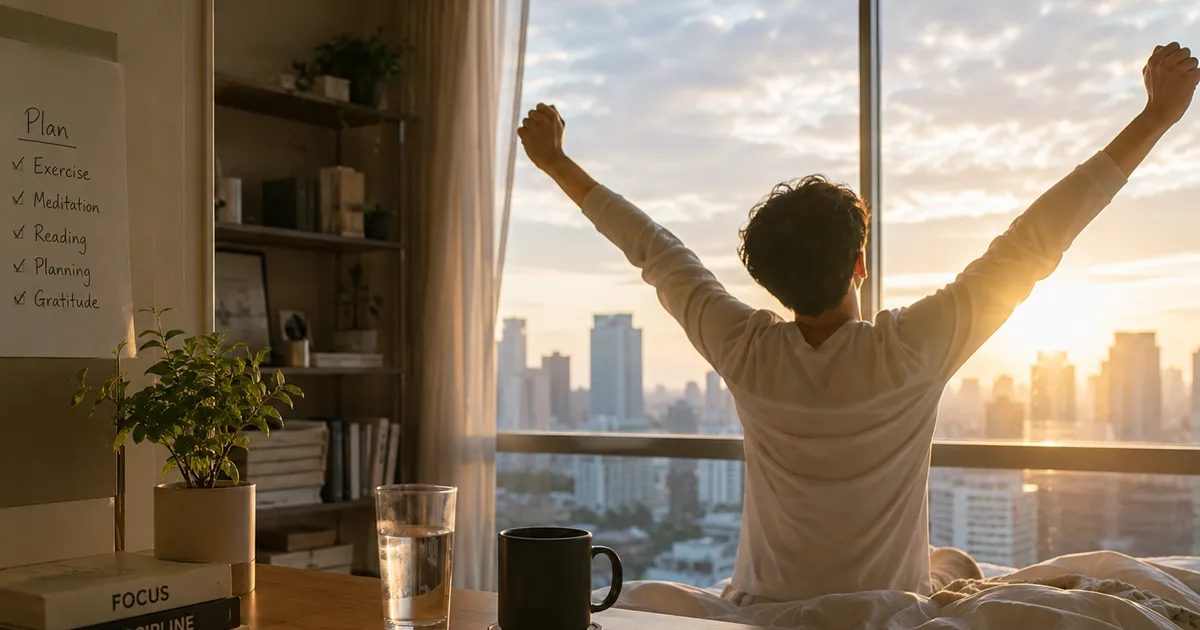
Morning: Give yourself the first hour with no decisions. No scrolling, no news. Just the physical experience of morning — light, coffee or tea, something to eat, whatever sounds come through the window. It sounds stupidly simple because it is. That’s the point.
Midday: Do one thing you’ve been putting off that isn’t urgent. Not because productivity is the goal, but because low-grade unfinished tasks quietly drain mental energy all week. Returning a package. Answering one email you’ve been avoiding. One thing, finished, closed.
Afternoon: Physical movement without a performance metric. A walk. Stretching. A slow swim. Something where you’re not tracking time or output. The research on this is pretty consistent — light physical movement without goal pressure is one of the fastest ways to move the nervous system out of a sympathetic (stress-alert) state.
If you usually listen to something during every walk, try one without anything in your ears. Notice how different 20 minutes feels when your mind gets to wander instead of receive.
Evening: Resist the urge to “make Saturday count” with a big social plan if you’re already depleted. Being around people you have to perform for — even people you like — is stimulating, not restoring. There’s a difference between connection that fills you and company that requires you to be “on.” Choose accordingly.
🌙 Sunday: The Nervous System’s Day
If Saturday is about slowing down, Sunday is about staying down.
This is where most people sabotage themselves. Sunday afternoon anxiety is so common it has its own name. The anticipatory dread of Monday starts creeping in around 3pm and suddenly the whole day feels like a countdown.
The antidote isn’t to ignore Monday. It’s to briefly, concretely prepare for it — and then mentally close the tab.
Spend 15 minutes on Sunday evening writing down:
- The three things you actually need to do tomorrow
- Anything you’re worried about (just write it, don’t solve it)
- One thing you’re looking forward to this week, however small
That’s it. That’s the whole “productivity” portion of your Sunday. The point is to give your brain a place to put the anxiety so it stops cycling in the background.
Sunday Reset: What Actually Helps
0 / 6📵 The Phone Is the Leak
This deserves its own section because it’s the one variable that quietly undermines everything else.
It’s not that your phone is evil. It’s that it keeps your nervous system in a mildly reactive state constantly. Every notification is a tiny activation — a small spike of alertness that your body has to metabolize. Over an entire weekend, that’s thousands of small spikes. No wonder you end up exhausted.
You don’t have to do a digital detox. But try one concrete boundary: keep your phone in a different room for two hours each day. Not because you’re disciplined, but just to see what happens to your attention span and your mood when stimulation isn’t always within arm’s reach.
Most people are surprised by how fast the restlessness fades — and what comes up underneath it.
“Boredom is the waiting room for your actual thoughts.”
💭 On Feeling Like You Didn’t Do Enough
This feeling will come. Probably Sunday evening. The sense that the weekend was wasted, that you should have done more, been more productive, felt more rested, had more fun.
It’s worth knowing where that feeling comes from. It’s not your conscience. It’s the same productivity anxiety that drove you all week, just wearing a different mask. Rest that “counts” in modern culture is rest that produces something — a refreshed mindset, a better mood, a healthier body. Rest that just is feels wasteful.
But your nervous system doesn’t care what you produced. It just responds to signals. And two days of low-stimulus, low-obligation, low-performance existence sends a very clear signal: it’s okay to relax now.
That signal, repeated enough weekends in a row, actually changes your baseline. You stop running so hot by default. The Monday dread gets a little quieter. Not because your life changed — but because your body stopped treating every moment like a threat to manage.
━━━━━━━━━━━━━━━
⏳ 3-Second Summary
Rest that restores isn’t about doing the right self-care activities. It’s about reducing the inputs that keep your nervous system from ever fully downshifting. Less stimulation, fewer obligations, one concrete look at Monday — then actually let the weekend be.