AI personality tests are kind of having a moment right now.
Not just in a casual “this is fun for five minutes” way.
People are genuinely using them to figure out how they communicate, how they date, what kind of friend they are, what career suits them, and honestly… why they keep emotionally attaching to the wrong people.
It makes sense.
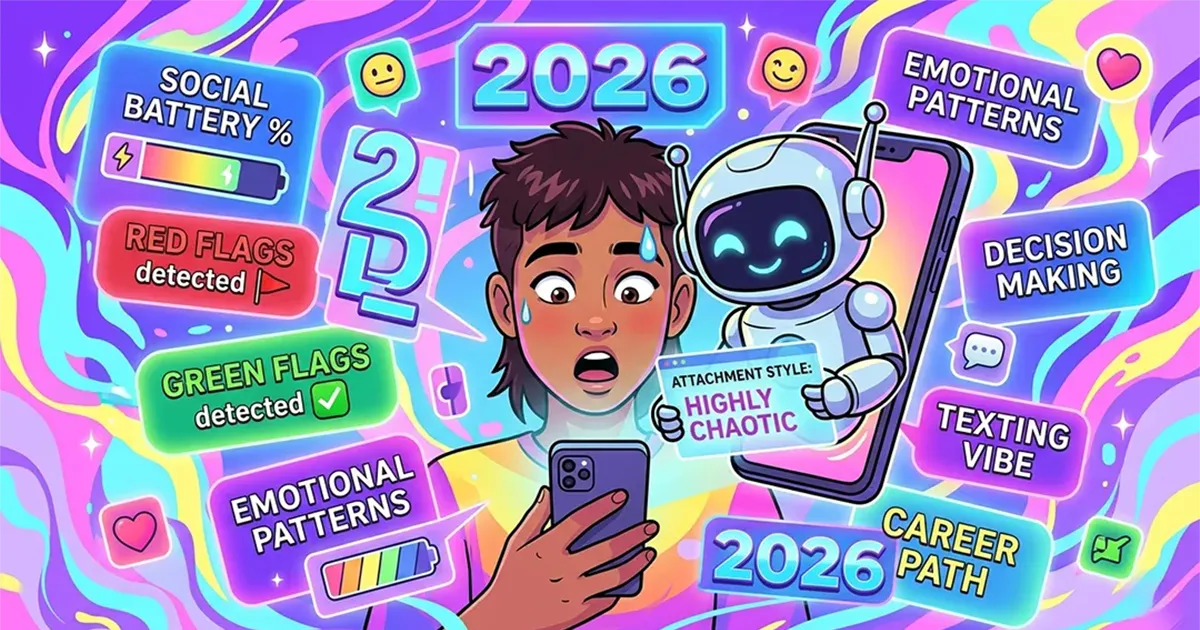
Traditional personality tests like MBTI and Enneagram are still wildly popular, but AI changed the experience completely. Instead of answering 40 painfully repetitive multiple-choice questions, newer AI tests can analyze your writing style, texting habits, emotional patterns, decision-making tendencies, and social behavior in a way that feels weirdly personal.
Sometimes uncomfortably personal.
Like, “Why does this robot understand my attachment issues better than I do?” levels of personal.
But not every AI personality test is worth your time.
Some are surprisingly insightful.
Others feel like they were built in 14 minutes with generic astrology energy and zero psychological depth.
So we ranked the most talked-about AI personality tests in 2026—from genuinely useful to emotionally questionable.
You’re welcome.
Quick Glance: 2026 AI Personality Test Rankings
| Tool Name | Vibe | Best For | Fun Factor |
|---|---|---|---|
| PlayOopsy | Emotional, Savage | Social media lovers | ⭐⭐⭐⭐⭐ |
| Crystal Knows | Professional | Career & Networking | ⭐⭐ |
| Character AI | Interactive | Deep talkers | ⭐⭐⭐⭐ |
| 16Personalities | Classic | Beginners | ⭐⭐⭐ |
| Human Design | Spiritual | Alternative seekers | ⭐⭐⭐ |
| Generic AI | Random | Boredom busting | ⭐ |
What Makes a Good AI Personality Test?
Before ranking anything, it helps to know what actually separates a good AI test from a forgettable one.
Because “AI-powered” has become one of those labels people slap onto basically everything now.
A strong AI personality test should ideally do at least a few things well:
- feel personalized instead of generic
- provide emotionally relevant insights
- offer shareable or visually engaging results
- feel fun enough to finish
- make users think, “Wait… that’s weirdly accurate”
That last one matters a lot.
The best tests create a small identity moment.
Something that makes people pause and go:
That is literally me.
Which is basically internet gold.
1. PlayOopsy AI Personality Quizzes
Let’s start with the one quietly gaining a lot of traction this year.
PlayOopsy leans hard into viral personality content, but in a way that feels more emotionally intelligent than most quiz sites.
Instead of only doing classic archetypes like “Which introvert are you?” it focuses on highly internet-native emotional topics.
Popular tests include:
- social battery type
- emotional attachment style
- texting personality
- friendship patterns
- workplace identity quizzes
What makes it stand out is tone.
The results don’t feel clinical or robotic.
They feel like your emotionally perceptive friend analyzed your entire digital existence and wrote a suspiciously accurate personality summary.
Which, honestly, is the sweet spot.
Why people like it
- highly shareable results
- mobile-friendly design
- emotionally relatable language
- strong Gen Z / Millennial appeal
Best for
People who want fun + accuracy + “why is this so me?” energy.
2. Crystal Knows
Crystal has been around longer, but it’s still one of the more interesting AI personality tools available.
Its approach is more professional.
Less “Which emotionally unavailable archetype are you?” and more “How do you communicate, collaborate, and influence people?”
It analyzes personality patterns to generate workplace communication insights.
Which sounds slightly boring until you realize how useful it can be.
Especially if you work remotely or constantly wonder why Slack messages somehow ruin your mood.
Pros
- communication-focused insights
- useful for work dynamics
- personality-based recommendations
Cons
- less entertaining
- lower social shareability
Best for
Career-focused users and people obsessed with productivity psychology.
3. Character AI Personality Simulations
This is less of a traditional test and more of an accidental personality mirror.
A surprising number of people are using AI chat interactions to indirectly analyze themselves.
Not because the platform explicitly offers a test.
But because talking to AI personalities often reveals your own communication patterns, emotional preferences, and attachment tendencies in real time.
Slightly dystopian? Sure.
Useful? Weirdly yes.
You learn a lot by noticing:
- which personalities you gravitate toward
- what emotional tone makes you comfortable
- how quickly you emotionally personify machines
No judgment here.
Mostly.
Best for
People who like interactive personality exploration instead of fixed quiz formats.
4. 16Personalities (Still Popular, Still Not Really AI)
Technically, this isn’t an AI personality test.
But it still gets grouped into the category constantly, so it deserves a mention.
16Personalities remains one of the most popular personality tests online because it’s:
- easy
- aesthetic
- beginner-friendly
- instantly understandable
Its biggest strength is accessibility.
Its biggest weakness is… well, oversimplification.
It’s fun and recognizable, but if you’ve taken it 14 times and gotten three different results depending on your mood, that’s not exactly shocking.
Still, it remains internet canon.
Best for
First-time personality test users.
5. Human Design AI Interpreters
Human Design is having a surprisingly strong internet comeback, especially with AI tools now interpreting charts automatically.
Again, not psychology in the traditional sense.
Much more spiritually flavored.
But the AI layer makes it significantly more digestible.
Instead of manually decoding incomprehensible charts, users can now get readable summaries about:
- energy patterns
- decision styles
- social dynamics
- work habits
Whether you view Human Design as insightful, symbolic, or glorified personality aesthetics is up to you.
But engagement-wise?
Still huge.
Best for
Users who like self-discovery with a spiritual or alternative framework.
6. Generic AI Quiz Builders (Proceed With Caution)
This category is… rough.
There are now hundreds of AI quiz generators pumping out instant personality tests daily.
And you can usually tell.
The common issues:
- shallow results
- repetitive questions
- generic outcomes
- zero emotional specificity
You know the type.
You answer 25 questions only to receive:
“You are thoughtful, kind, and value authenticity.”
Groundbreaking.
Truly life-changing information.
These tests aren’t necessarily bad—they’re just forgettable.
And in 2026, forgettable content dies fast.
Why AI Personality Tests Feel So Addictive
There’s a reason these tests keep going viral.
Actually, several reasons.
AI personality tests combine three things the internet is basically built to reward:
Identity validation
People love feeling seen.
Especially online.
A test that makes someone feel accurately understood creates immediate emotional payoff.
That payoff is highly shareable.
Emotional curiosity
Humans are naturally curious about themselves.
Not in a narcissistic way.
In an existential way.
People genuinely want language for their patterns.
Why do I shut down socially?
Why do I attract chaotic people?
Why does group texting drain my soul?
AI tests package those questions into digestible answers.
Low-stakes self-discovery
Therapy is expensive.
Existential crises are exhausting.
A five-minute AI test? Accessible.
Even when users know it’s partially entertainment, the emotional insights can still feel useful.
That combination is powerful.
Are AI Personality Tests Actually Accurate?
Short answer: sometimes.
Longer answer: accuracy depends entirely on methodology.
A well-designed AI personality test can absolutely identify useful patterns.
Especially around:
- language style
- emotional tone
- social preferences
- behavioral tendencies
But no AI test can fully capture a human personality.
You are slightly more complicated than a quiz result.
Probably.
The real value isn’t perfect diagnosis.
It’s reflection.
A good test gives you language, patterns, and observations worth thinking about.
A bad test just gives you a colorful identity badge and sends you on your way.
Both have their audience.
Conclusion
AI personality tests are no longer just a niche internet curiosity.
They’ve become part entertainment, part self-discovery tool, part emotional mirror.
And honestly? That combination is hard to resist.
The best ones don’t just hand you a generic label.
They make you feel surprisingly understood.
Sometimes a little too understood.
So whether you’re looking for workplace insight, emotional pattern analysis, or just a mildly concerning amount of self-awareness, there’s probably an AI personality test for that now.
Welcome to 2026.
The robots are analyzing your attachment style.